Covering around 75 per cent of the province, Nova Scotia’s forests both define its landscape and support a key industry – an industry that is looking to the future with the help of Dal researchers.
A Dal-led research team was recently awarded $1.6 million to explore the future of forestry in Nova Scotia. The study will undertake a holistic approach to support shifting to a forestry model referred to as “ecological forestry.”
A team of forestry researchers led by Dalhousie University is receiving $1.57 million to undertake research on Nova Scotia’s forests and the industries and communities who depend upon them.
The new project forms the cornerstone of Research Nova Scotia’s (RNS) forestry research program, which seeks to identify and convene research that will support Nova Scotia’s transition to an ecological forestry model. Operated in partnership with the Forestry Innovation Transition Trust (FITT), the program includes economic, ecological, and social components of forestry, to develop a holistic understanding of where the sector is going, and how to help get there in a sustainable and equitable way.
“This research investment is a significant step forward in the implementation of our forestry research agenda,” says Stefan Leslie, CEO of RNS. “This interprovincial work will help build knowledge, address gaps, and identify opportunities to support the transition to sustainable forestry in Nova Scotia.”
The five-year research project will measure how changing forestry practices impact biodiversity and landscape connectivity, evaluate recreation opportunities arising from changing forestry practices, value carbon as part of forest lands in the province, investigate and undertake effective knowledge exchange with woodlot stewards and operators and registered professional foresters, and support Mi’kmaq-led forestry.
“Collaboration and community engagement are key components of our research project,” says Dr. Alana Westwood, lead researcher from Dalhousie University. “It’s important to ensure that people who work in and live near Nova Scotia’s forests are part of our research.”
Managing forests is not as simple as growing or cutting down trees. Global forest management is the complex interplay of government policies and directives, cultural and spiritual values, stakeholder perspectives, and efforts from both industry and conservationists to maintain ecological functions of forests.
No one management style perfectly combines science, policy, stakeholder needs and cultural values. What is key, though, is that these groups are able to talk to one another effectively, work together and co-create approaches to forest management.
The framework of Knowledge Exchange (KE) can help to answer these complex questions.
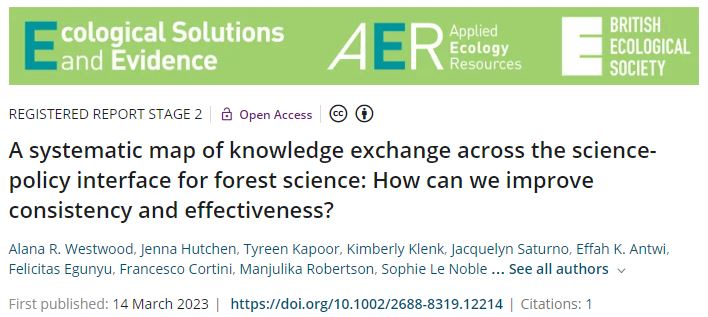
Read the rest of the blog post by coauthors Manjulika Roberston and Jenna Hutchen about the new paper at The Applied Ecologist.
Citation: Westwood, A., Hutchen, J., Kapoor, T., Klenk, K., Saturno, J., Antwi, E., Egunyu, F., Cortini, F., Robertson, M., Le Noble, S., Wang., J., Falconer, M., Nguyen, V. 2023. A systematic map of knowledge exchange across the science-policy interface for forest science: How can we improve consistency and effectiveness? Ecological Solutions and Evidence, 4: e12214. https://doi.org/10.1002/2688-8319.12214
Congratulations to Jackie Saturno, former lab Research Associate, on this lead author publication setting a foundation for how Indigenous knowledge about tǫdzı (one of the Dene words for boreal caribou) can be used to better guide conservation planning. The paper brings together a diverse team from across government departments and agencies along with the invaluable expertise of the Dene Nation. Congratulations also to all co-authors who provided their valuable time and knowledge.
This is the Stage 1 article of a two-part Registered Report published in Ecological Solutions and Evidence that presents the study design for the research (introductions and methods). Read the full article and look forward to the forthcoming study results!
Citation: Saturno, J., Boeckner, M., Haché, S., Hodson, J., McAuley, E., McIntire, E., Micheletti, T., Polfus, J., Sliwa, S., Teed, T., & Westwood, A. R. (2023). Setting a foundation for Indigenous knowledge systems-guided boreal caribou (tǫdzı) conservation planning in the Western Boreal Region of Canada: A systematic map protocol. Ecological Solutions and Evidence, 4, e12211. https://doi.org/10.1002/2688-8319.12211
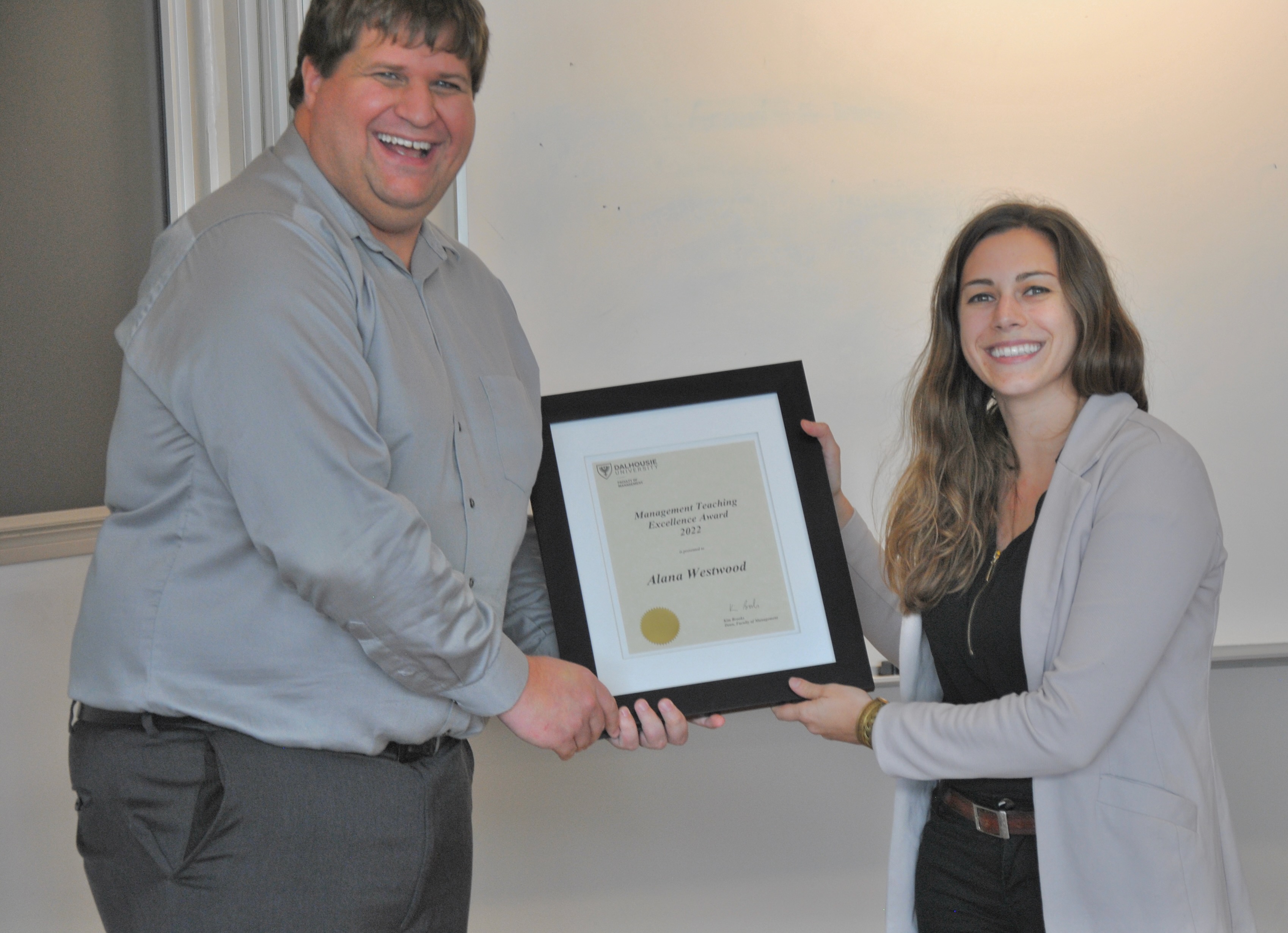
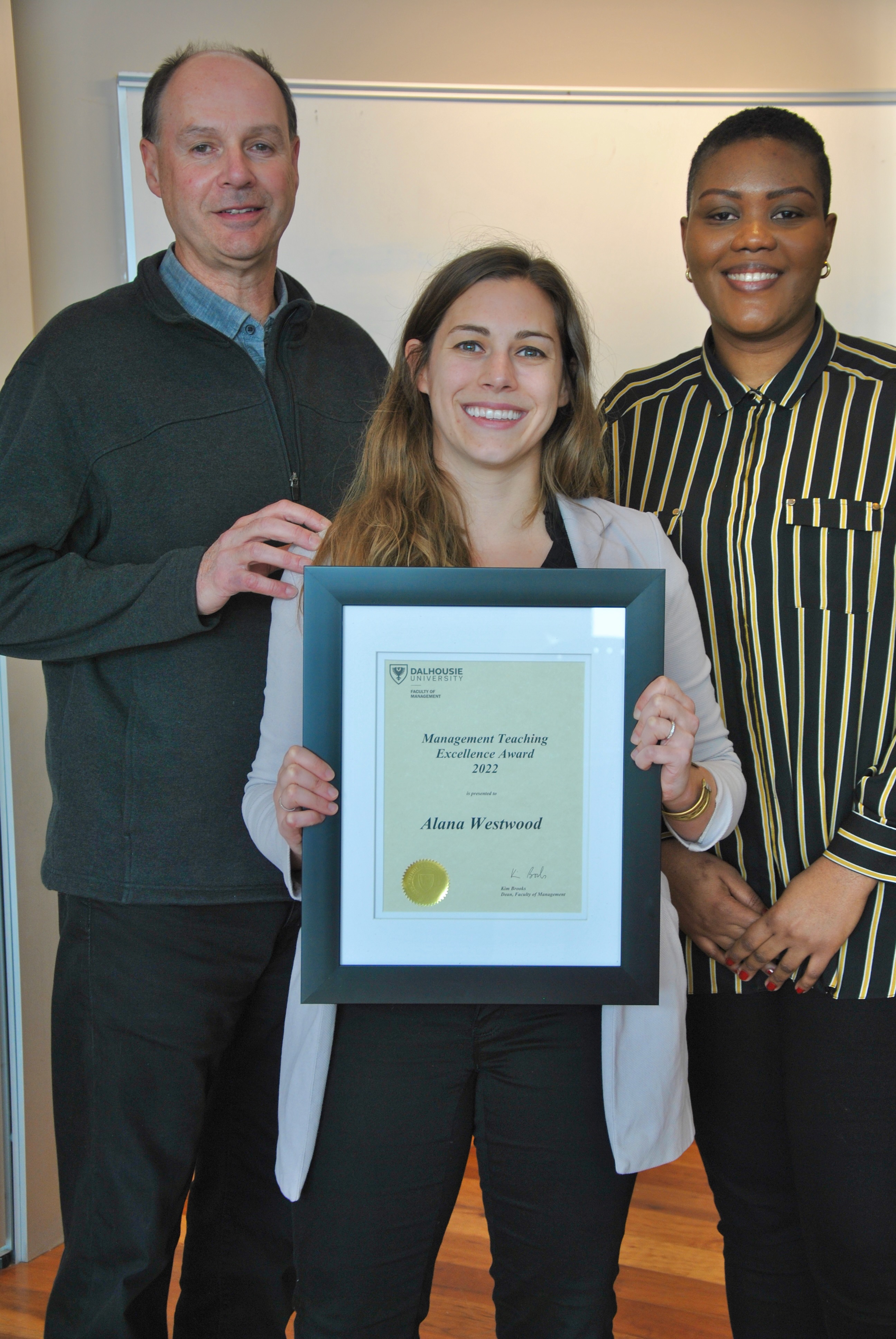
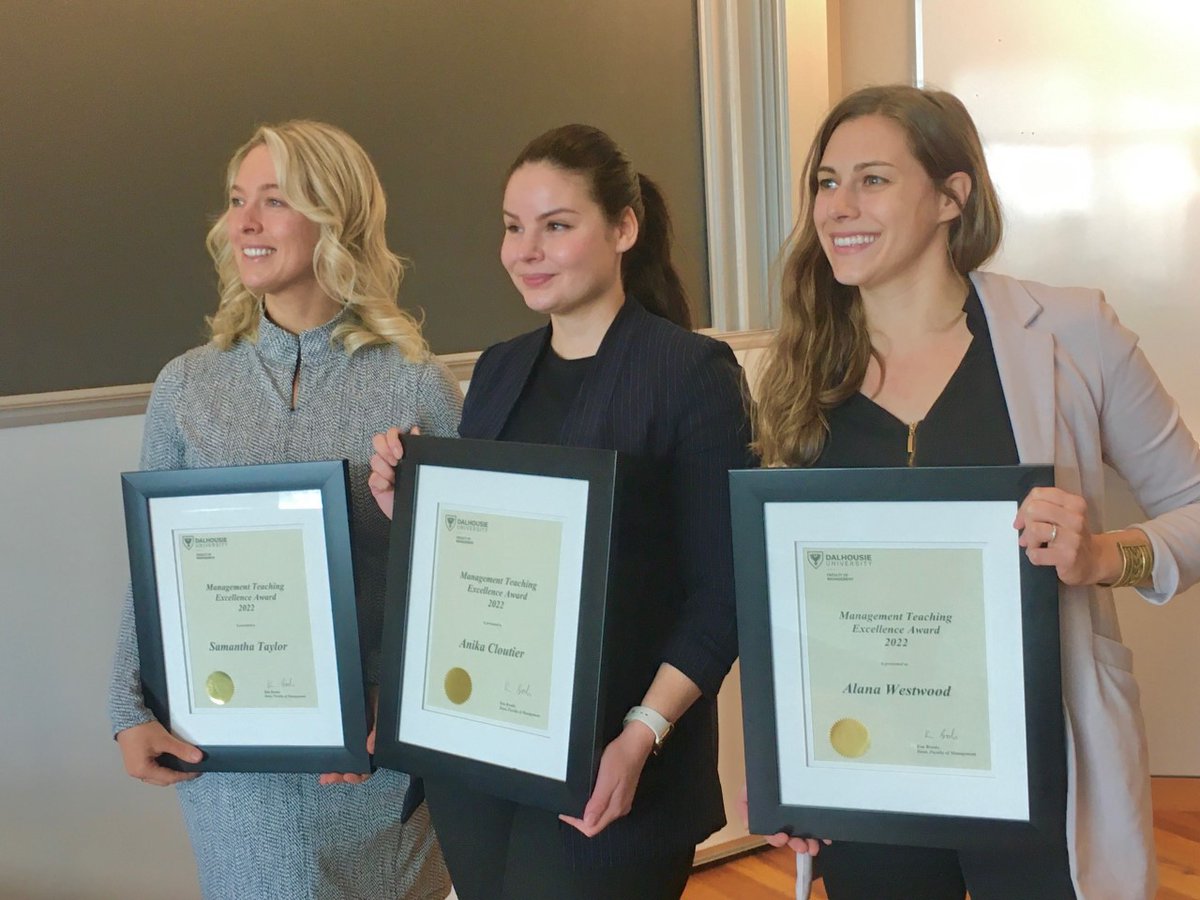
Several students attended the award ceremony, including Mercy Fiamavle who praised Dr. Alana Westwood for her teaching style. Dr. Westwood’s assignments are geared towards developing students’ professional skills to prepare them for their future careers, which is not usually prioritized in academia. The ceremony was also attended by special guest from Winnipeg, Dr. Richard Westwood who inspired our own Dr. Alana Westwood to excel in her role as a teacher and mentor.
Dr. Westwood was also awarded the Rising Research Star by the Faculty of Management for her immense success publishing in three top-tier journals and contributing to five government reports.
The Rising Research Star Award is given to faculty members who are not yet tenured and is based on their record of publication and how much money they’ve captured in grants. Read more about the other winners on the Dalhousie website.
This quote was the mantra for a Species Distribution Modelling Workshop at Dalhousie University over January 12 and 13 hosted by the Westwood Lab, in partnership with members from the Atlantic Canada Conservation Data Center (AC CDC). Many bright minds congregated at Dalhousie University, representing all levels of expertise to discuss and determine the best practices for modelling species distributions in Atlantic Canada and elsewhere.
Lightning Talks
To kick off the workshop, seven lightning talks given by the attendees gave the group insights into ongoing projects, applications for models, and challenges. The first section had presenters Dr. Katherine Dearborn (representing Dr. David Lieske), Dr. Christopher Edge and Dr. Robert Buchkowski, and Miranda Frison discussing some of the intricacies and applications of modelling.
Photo: Lightning talk given by Dr. Christopher Edge (pictured) and Dr. Robert Buchkowski.
The second had Dr. Katherine Dearborn, Thomas Baker, Charity Robicheau and Jocelyn Pender presenting a few different model types, data-specific considerations, and how models for specific species can be used in conservation efforts.
The final section had Riley Scanlan and Courtney Burk discussing the applications of connectivity modelling, and how this can identify high value areas for multiple species conservation. The lightning talk abstracts and associated slides, as well as the conference proceedings can be found on the AC CDC’s website.
Asking and Answering Critical Questions
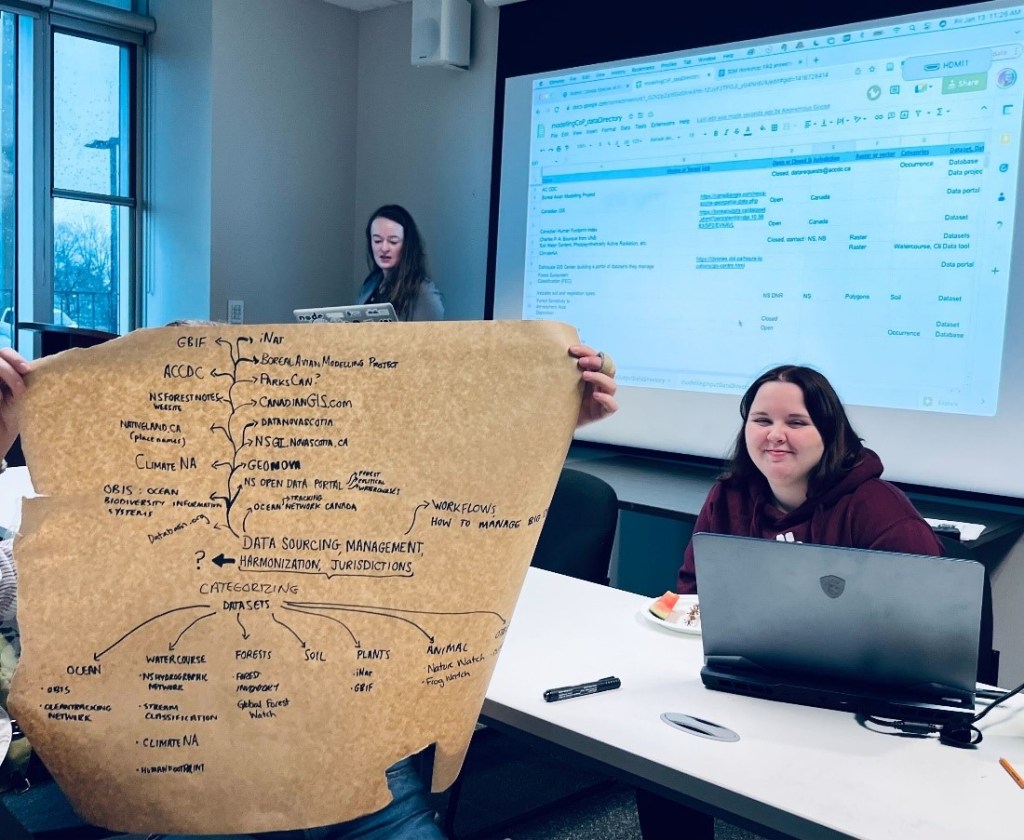
After an enlightening introduction to ongoing modelling efforts and case-specific challenges, the attendees brainstormed the major challenges facing modelers of all levels of expertise in Atlantic Canada.
On day two of the workshop, after having an evening of merriment and reflection, attendees reunited in groups to tackle drafting answers to these frequently asked, but not so frequently answered questions in a knowledge sharing and culmination effort. Overall, participants concluded that even with some uncertainty in modelling, the results of this great effort can still be very practical if we understand the inherent limitations of spatial data and data availability.
Photo: Drafting answers to questions.
Panel Discussion
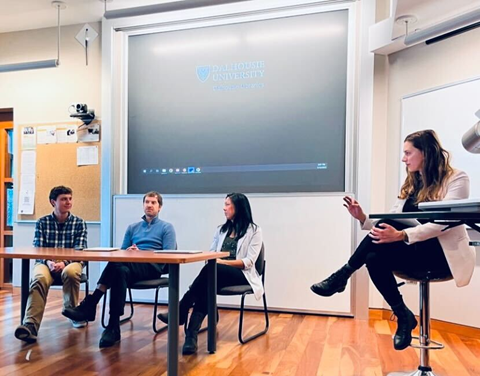
The workshop concluded with a School for Resource and Environmental Studies Student Society-hosted “SRES Talk”, which was a lively panel discussion with Dr. Robert Buchkowski, Dr. Derek Tittensor, and Dr. Amy Mui, moderated by Dr. Alana Westwood. The panel discussed addressing reconciliation with Indigenous peoples through modelling practice, the importance of reporting uncertainty, a wealth of model applications, and how we can use models to begin to understand how to conserve and manage species in an uncertain future.
Photo: Panel discussion. From left to right: Dr. Robert Buchkowski, Dr. Derek Tittensor, Dr. Amy Mui, and Dr. Alana Westwood.
The best practices developed by workshop participants will be shared as part of the Atlantic Canada Species At Risk Habitat Modelling Community of Practice. This group is compiling best practices and resources for habitat modelling in the region. The workshops’ findings will be posted on the Community of Practice’s page and the conclusions from the working group on the FAQ page. Subscribe to the AC CDC’s Community of Practice email list to stay informed about continued efforts to develop resources for those embarking on the creation and use of species distribution models.
On January 6, 2023, Dr. Alana Westwood was featured on a CBC segment, Information Morning – Cape Breton hosted by Steve Sutherland. During her interview, Dr. Westwood was asked about environmental assessment (EA), specifically in relation to the “Green hydrogen” project by EverWind Fuels to develop a hydrogen and ammonia production facility in Point Tupper.
In addition to describing how EA typically works and some of the issues with the current process, Dr. Westwood identified the project as one of the first of its kind in Nova Scotia and claimed/stated that “there is an opportunity here to come up with a set of requirements for the EA that could set a new precedent for doing things a little better.” Listen to the full-length segment.
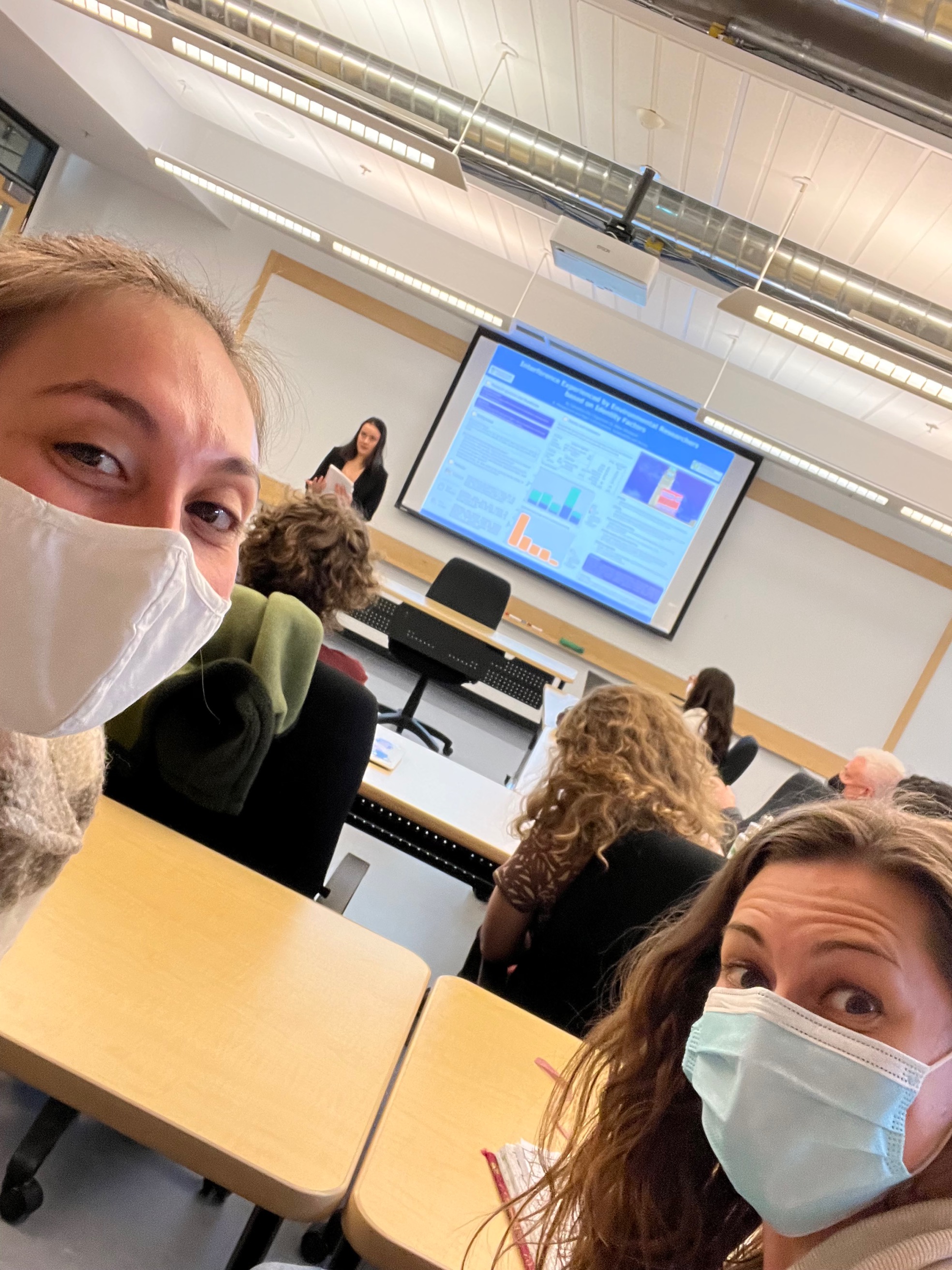
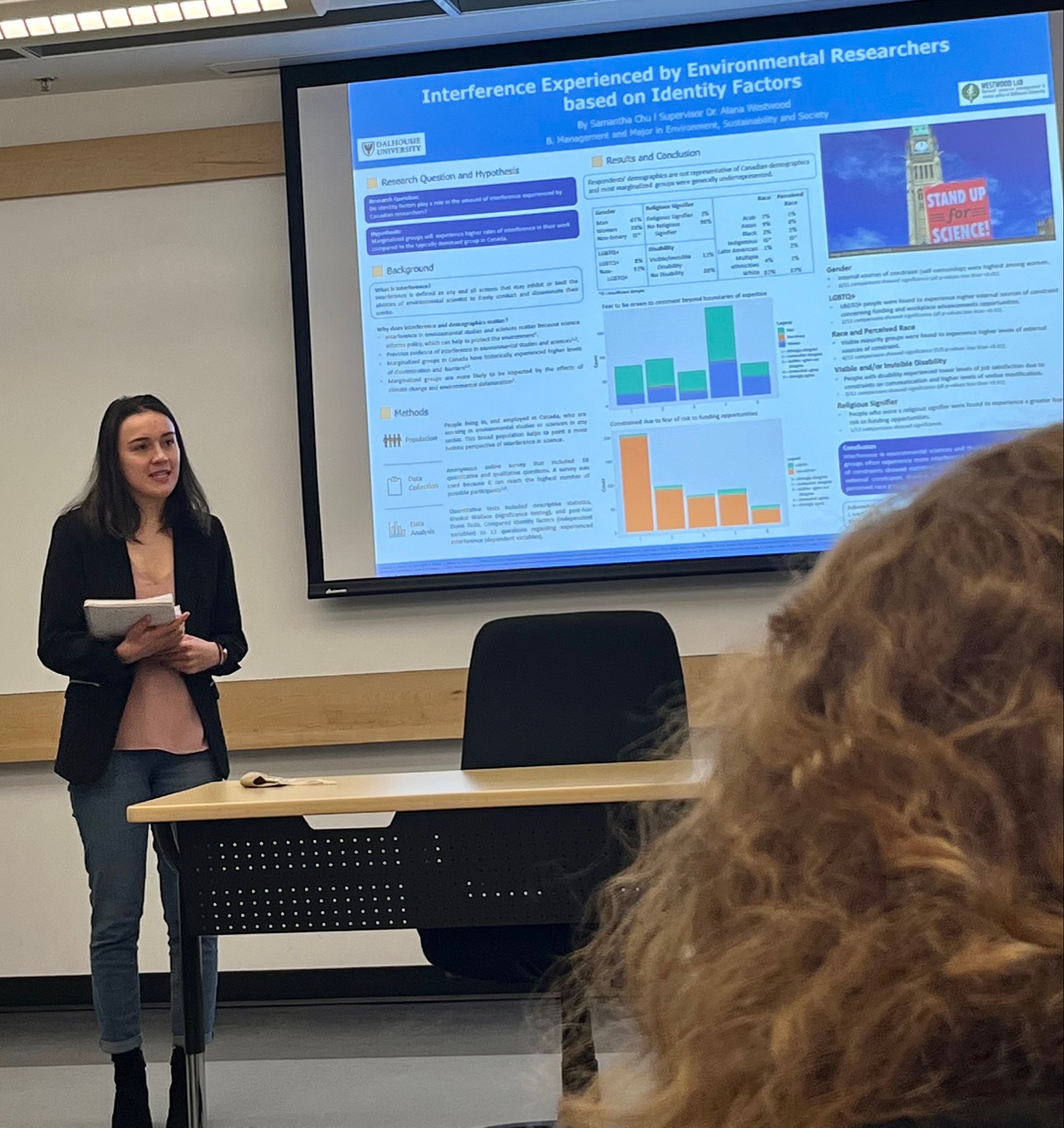
Congratulations are in order! Samantha Chu has completed her Honour’s undergraduate degree in Management with a major in Sustainability and Manjulika Robertson has completed her Master of Environment Studies at the School for Resource and Environment Studies.
Manjulika Robertson and Samantha Chu worked closely together over the past year to develop each of their theses using the same dataset collected via survey to study the prevalence and impacts of interference in environmental studies and sciences research across Canada.
Manjulika Robertson’s thesis focused on naming and documenting the phenomenon of interference in science and its impact for researchers of different sectors, locations, research areas, and career stage. In Samantha Chu’s thesis, she conducted a deep dive into the survey respondents’ personal identity factors to assess the role that identity demographics play in influencing a researcher’s perception of their experience with interference in science. Both theses are available now on DalSpace.
Manjulika Robertson will be staying on with the Westwood Lab as a full-time research associate for 2022-23. Samantha Chu has accepted a contract research assistant position with the Clean Foundation, where she primarily works with Nova Scotia Environment and Climate Change on their adaptation team.
Citation:
Robertson, M. E. (2022, August 29). Investigating interference in the environmental sciences and studies in Canada: Defining the phenomenon and measuring its prevalence and impacts. [Faculty of Graduate Studies Online Theses, Dalhousie University]. Dal Space. http://hdl.handle.net/10222/81905
Chu, S. (2022, April 22). Interference in Environmental Studies and Sciences: Understanding how Identity Factors Influence Experienced Interference. [College of Sustainability Undergraduate Honours Theses, Dalhousie University]. Dal Space. http://hdl.handle.net/10222/81591
Dr. Alana Westwood will be principal investigator on two innovative projects that will generate new, collaborative, and evidence-based knowledge in the sectors of forestry and impact assessment.
The first, the SSHRC-funded three-year project What constitutes effective knowledge exchange at the environmental science-policy interface? will continue previous research done by the lab and partners on knowledge exchange in forestry to help overcome the knowledge-implementation gap (read more in this Dal News article).
The application was supported by current lab member and MES student Manjulika Robertson. She will continue with the lab on this project, leading a communications experiment to provide insight on the effectiveness of different ‘one-way’ knowledge exchange methods as well as examine how leaders in science move knowledge across the science-policy divide.
The second is the IAAC-funded project Queers, closets, and man camps which will set a foundation to understand if and how the views of 2SLGBTQQIA+ people are being considered in IA processes under the 2019 Impact Assessment Act (IAA). This is the first known inquiry into the impact of major infrastructure and natural resource development projects (MINRDP) on 2SLGBTQQIA+ communities in Canada. The application was supported by current lab research assistants Ali MacKellar and Kimberly Klenk, and Ali will conduct this research during their MES at Dalhousie University starting this fall.
Both projects create new or continue existing partnerships with academia (Dalhousie University, Carleton University, University of Alberta, University of New Brunswick, and University of Regina), government (the Canadian Wildlife Service – Environment and Climate Change Canada, Natural Resources Canada, and the Treasury Board of Canada Secretariat) and non-profit organizations (Mitacs and Evidence for Democracy).
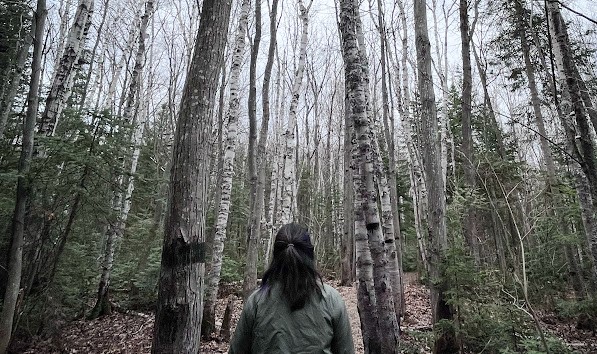
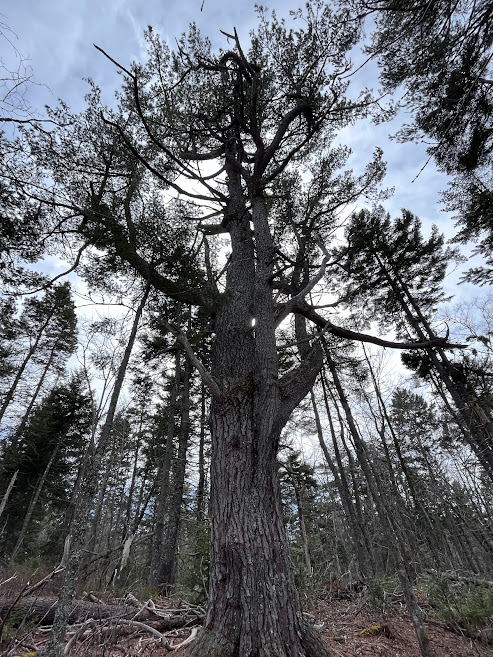
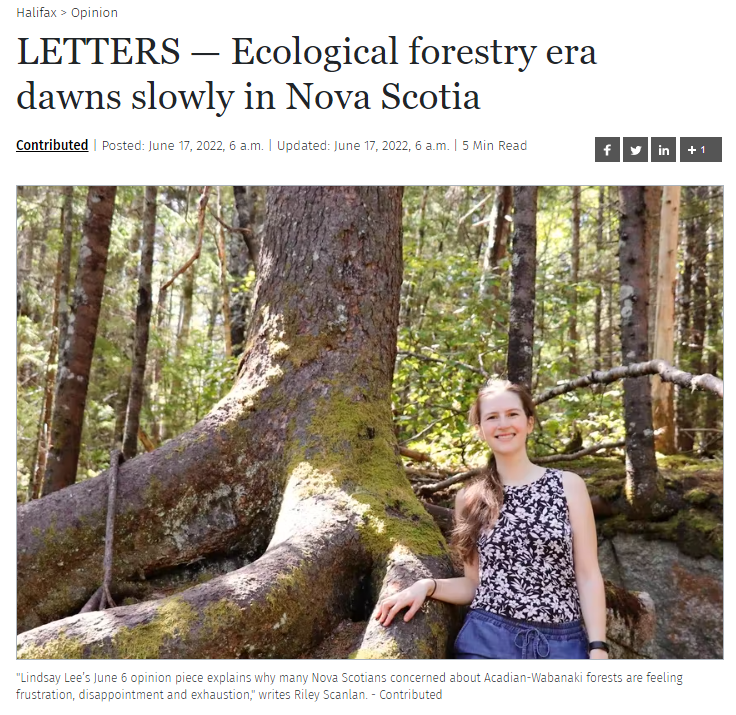
“The few areas of remaining old forest are wonders to explore. However, I fear the combined effects of industrial forestry, climate change and invasive species will quickly eradicate what is left.”
Riley, Westwood Lab member and Master of Environmental Studies candidate at Dalhousie University, submitted a short response to Lindsay Lee’s June 6 opinion piece in the Chronicle Herald on the subject of Nova Scotia’s slow transition to an ecological forestry model. In the article, she insists on Nova Scotian’s dedication to sustainable forestry practices and urges the proper implementation of the 2018 Lahey Report.





 Westwood Lab