Dr. Alana Westwood featured in artist Kimberly Glickman’s Voices for the Wild project

Montréal-based artist Lisa Kimberly Glickman has started a new series called Voices for the Wild, which honours female land defenders and environmentalists from across Canada.

Lisa’s work highlights poets, artists, scientists, activists, and others and poses each of the women with animals from the impacted area in the landscapes they are trying to protect. Alana’s portrait places her in a black spruce forest with an olive-sided flycatcher (Contopus cooperi), a species at risk who can be found calling “quick, three beers!” from spruce tops at the edges of bogs, burns, and clearcuts in the Wabanaki forest region. Alana co-wrote the COSEWIC assessment report for this species and has studied impacts of forest harvesting on olive-sided flycatcher habitat.

Painting by Lisa Kimberly Glickman showing Dr. Alana Westwood in front of a forest with an olive-sided flycatcher atop a black spruce tree.

Alana is humbled to be included in this series alongside titans in efforts to maintain healthy environments in Canada like water defender Autumn Peltier and novelist Catherine Bush, among others.

Find out more about Lisa Kimberly Glickman’s Voices for the Wild project here, and view her artwork and upcoming showings here.

Dal professors and researchers make key recommendations to reform environmental assessment in Nova Scotia 

Several weeks ago, Nova Scotia’s Department of Environment and Climate Change offered Nova Scotians the opportunity to weigh in on their commitment to modernize the environmental assessment (EA) process as defined in the Environmental Goals and Climate Change Reduction Act. Some of Dalhousie’s leading experts in the area, including Dr. Alana Westwood, Ali MacKellar, Ben Collison, and Dr. Ian Stewart authored a letter with recommendations for modernizing EA regulations in Nova Scotia. This letter was signed by a further 10 Dal-affiliated experts with experience in EA policy and practice. 

Given that the last major update of existing regulations was in 2008, and we now have several years’ experience with the federal Impact Assessment Act (2019), it is an opportune time to align Nova Scotia’s EA regulations with global and national best practice.  

Some key recommendations made by the authors in brief include:  

1. The Office of the Auditor General of Nova Scotia should investigate the history of the decision process for Class 1 EAs to ensure the timelines of the law are being appropriately interpreted by the Department of Environment and Climate Change and the Minister.  

2. Mandating GBA+ as a lens through which to assess impacts must be a mandatory part of all new assessments. 

3. A commitment on the part of the Province to uphold scientific integrity in reviews should be added, explicitly, to the EA Regulations.  

4. An overhaul of the online EA Registry to improve searchability and make all relevant documentation available to the public. 

5. Make use of S. 47 of the Environment Act to support joint assessments between the Province and Mi’kmaw communities.  

6. Develop a participant funding program in which Mi’kmaw communities and the public can apply for funds to support their participation in, and independent study of, EA processes for proposed projects.  

7. Initiate a province-wide process of collaborative regional land and water-use planning between governments, Mi’kmaw Nations, and communities at the level of watersheds or ecodistricts.  

8. Include cumulative effects as a lens for impact predictions for all Valued Components in project documents, rather than additional section at the end of documentation.  

9. Climate change should be a mandatory prediction component in all project documentation (including EA Reports, Focus Studies, etc.) and projects should not be approved without providing estimates of both climate change on the project and the project’s impact on climate change. 

A news release from the Government of Nova Scotia detailing the opportunity to weigh in is available online.  
Congratulations on graduating, Riley Scanlan!


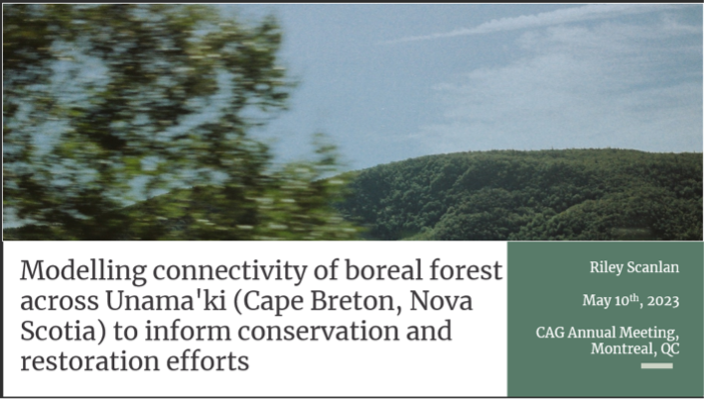
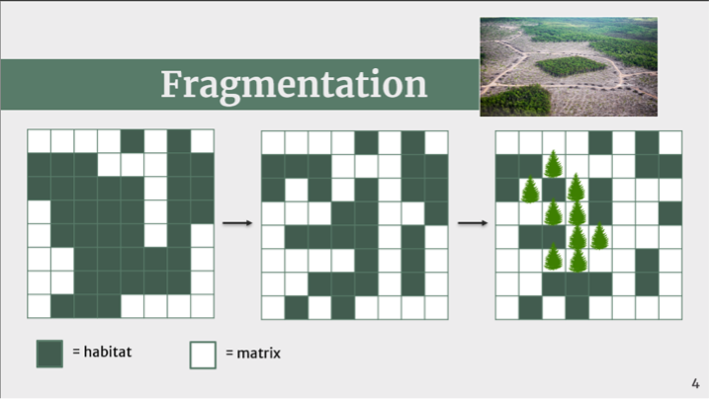
Riley Scanlan is graduating from Dalhousie with a Master of Environmental Studies from the School for Resource and Environment Studies, in the Faculty of Science. Riley’s research focused on boreal forests in Unama’ki (Cape Breton, Nova Scotia), developing a novel, user-friendly approach to assess data quality and prioritizing areas for treeplanting to restore connectivity in parks and protected areas.

During their time as a student, Riley was an active member of the SRES Student Society and was awarded the Scotiabank Ethics in Action Award and a Neil Munro Parks and Protected Areas Award

You can check out Riley’s full-length thesis on DalSpace.  

Citation:  

Scanlan, R. (2023, August). USING INFORMATION ON PAST AND PRESENT FOREST COVER TO GUIDE RESTORATION EFFORTS: AN ANALYSIS OF DATA QUALITY AND LANDSCAPE CONNECTIVITY IN UNAMA’KI (CAPE BRETON, NOVA SCOTIA). [Faculty of Graduate Studies Online Theses, Dalhousie University]. Dal Space. http://hdl.handle.net/10222/82760 

Welcome to our new research coordinator, Revant Sharan

Congratulations to our new research coordinator, Revant Sharan. Revant is recent MREM grad who will be coordinating research on Maximizing Positive Outcomes for Biodiversity, Recreation and Carbon Market Valuation, through Nova Scotia’s transition to Ecological Forestry funded by the Forestry Innovation Transition Trust (FITT) grant (awarded to PI, Dr. Alana Westwood and co-applicants in May 2023). 

During the five-year project, Revant will manage the FITT grant’s logistics, track project milestones and liaise with the public and external organizations. He will be collaborating with research partners from academia, government, private industry and Indigenous-led organizations. Revant will also be filling the role of Westwood Lab manager, supporting field research and maintaining day-to-day operations. 

Battling Canadian wildfires in Nova Scotia: Preparing for the next bout

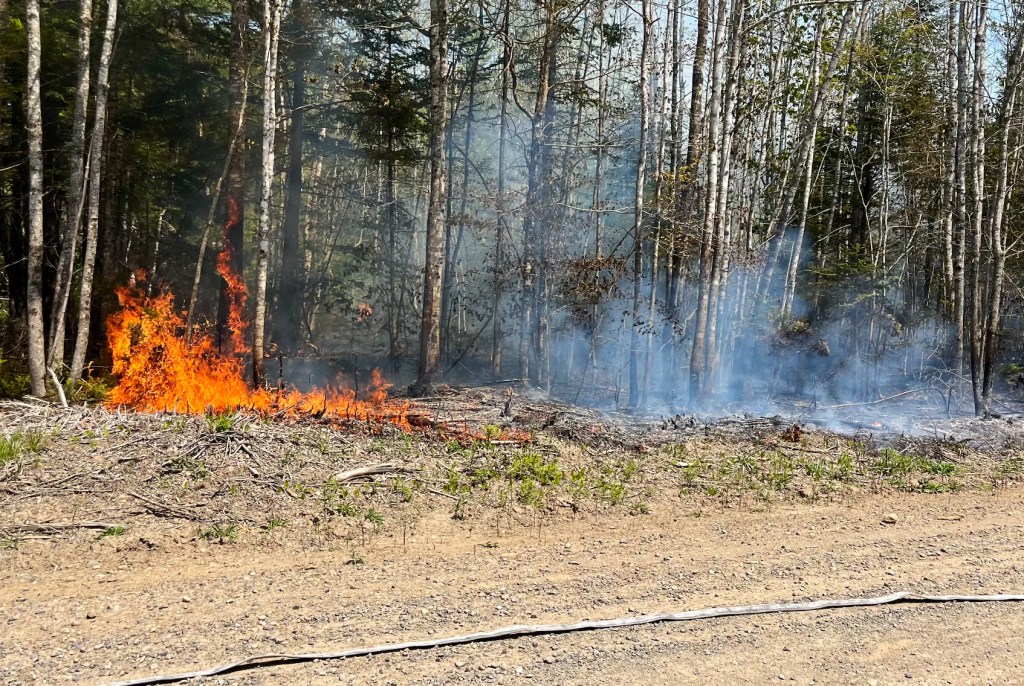
Photo from: Saltwire (2023)

Starting on May 27, Nova Scotia experienced unprecedented wildfires starting in Tantallon, NS that spread over 230 square kilometers. Thousands of individuals residing in the affected areas were forced to evacuate from their homes. No human lives were reported lost, but the impacts were devastating. 

Experts say we are far from the end of a “season” of wildfires due to advancing climate change worldwide. In a recent interview, Dr. Alana Westwood said, “This new extreme weather is going be our new normal,” and we have to prepare. 

In general, Westwood calls on provincial and municipal governments to revamp planning to expect more climate emergencies and engage in preparation and prevention rather than reaction. 

As for individual preparedness, Saltwire published a list of recommendations from Dr. Westwood on 3 things you can do right now to protect your home from wildfires in the short and long term.  

Dangerous wildfires have also broken out this past month in Alberta and in Ontario, worsening air quality for both provinces and their American neighbour states. 

In an interview with Global News, Dr. Westwood emphasized that “we need to learn how to live with fire. Other places in the world have already been doing this for generations. It’s time for us to understand how serious this is.”

For more on the wildfires, check out TVO Today’s panel discussion with experts from across Canada including Dr. Westwood asking how Canada can solve the wildfire pandemic. 

Celebrating recent awards and scholarships at the Lab    

Congratulations are in order for lab member, Riley Scanlan for winning a presenter award for her paper presentation at the 73rd Annual Meeting of the Canadian Association of Geographers in May 2023. Awesome job, Riley! 

Incoming MES Student, Samantha Chu also earned a Nova Scotia Graduate Scholarship for her thesis proposal investigating the knowledge exchange preferences and practices of foresters across Canada.

Looking forward to seeing that research in the Fall, Sam! 

Get with the times: old laws can’t keep up with Nova Scotia’s new gold rush

An increase in mine staking in the province needs to be met with a rigorous environmental assessment process — not the tight timelines, loopholes and lax consultation requirements of the past.

Read the full article by Alana Westwood on The Narwhal.

Nova Scotia has had three gold rushes since colonization: one in the 1800s, one at the beginning of the 1900s and, most recently, in 1942. Eighty years later, the gold market is sitting near an all-time high — but this time, things are different: we’ve moved from miners with pickaxes to open pits deeper than high-rises, their waste stored in open tailings ponds the size of multiple football fields.

Like many places since the COVID-19 pandemic, Nova Scotia has experienced sharp rises in land values putting pressure on not only would-be homeowners, but also farmers and woodlot owners. Yet, the cost for any individual or company to obtain a mineral exploration licence — staked claims to the minerals found in the ground — is just 61 cents per hectare. Visions of enormous profit combined with a low upfront prospector cost has resulted in an explosion of exploration. Most licences are intended for gold.

In 2013, our calculations show there were 158 mineral exploration licences covering approximately 1.5 per cent of Nova Scotia’s total subsurface. Ten years later that number had jumped to 2,124 licences, covering 18 per cent of the province’s land mass. Although most claims don’t turn into mines — they’re often an effort by companies to assure shareholder confidence — many will still enter into the provincial environmental assessment process with the hopes of being approved for mining. 

For more on Nova Scotia’s new gold rush, check out these interviews with Dr. Alana Westwood:

CTV News | Nova Scotia’s modern ‘gold rush’ poses huge risk to climate, expert warns

BNN Bloomberg | Nova Scotia’s mining rules are outdated

Well Wishes for Westwood Lab Graduates

Congratulations to Sasha Mines and Geneva Bahen! 

Sasha Mines is graduating from Dalhousie with a Bachelor Arts, Combined Honours in Environment, Sustainability and Society & Law, Justice and Society. She minored in French and earned a certificate in Indigenous studies. Her undergraduate honour’s thesis offers an examination of Nova Scotia’s Endangered Species Act (ESA) to provide valuable insight into the Nova Scotian ESA itself, and how public perceptions can affect policy implementation and ultimately, conservation outcomes.

Sasha will be starting law school in pursuit of her JD at the University of Victoria this coming September. Kudos to you, Sasha!

Geneva Bahen, graduating with a Bachelor of Science, Combined Honours in Environmental Science & Environment, Sustainability and Society, also completed an undergraduate honour’s thesis. Geneva’s work focused on creating a species distribution model to understand the landscape-scale drivers of distribution of American beaver (Castor canadensis) in Mi’kma’ki (Nova Scotia). 

Geneva’s thesis project and earned her an award for Best Honours Thesis and the Art and Dorothy Cooke Memorial Scholarship for the research proposal. Geneva was also awarded the Science Atlantic Communication Award for her presentation at the Science Atlantic Environment Conference in March 2023. Way to go, Geneva!   

You can check out both of their full-length theses on DalSpace. 

Citation:  

Bahen, G. (2023, April). Telling the North American beaver tale: modelling Castor canadensis distribution in Mi’kma’ki (Nova Scotia, Canada). [Earth and Environmental Sciences Undergraduate Honours Theses, Dalhousie University]. Dal Space. http://hdl.handle.net/10222/82555

Mines, S. (2023, April 24). Beyond the Implementation Gap: A Narrative Analysis of Nova Scotia’s Endangered Species Act. [College of Sustainability Undergraduate Honours Theses, Dalhousie University]. Dal Space. http://hdl.handle.net/10222/82582

Nova Scotia is moving to a new forestry model — Dal researchers explore the consequences

Covering around 75 per cent of the province, Nova Scotia’s forests both define its landscape and support a key industry – an industry that is looking to the future with the help of Dal researchers. 

A Dal-led research team was recently awarded $1.6 million to explore the future of forestry in Nova Scotia. The study will undertake a holistic approach to support shifting to a forestry model referred to as “ecological forestry.”

Read the rest of the article on the Dal News.

Dalhousie forestry research team led by Westwood lab receives $1.57 million to study Nova Scotia forests

Read the full article from Research Nova Scotia.

A team of forestry researchers led by Dalhousie University is receiving $1.57 million to undertake research on Nova Scotia’s forests and the industries and communities who depend upon them.

The new project forms the cornerstone of Research Nova Scotia’s (RNS) forestry research program, which seeks to identify and convene research that will support Nova Scotia’s transition to an ecological forestry model. Operated in partnership with the Forestry Innovation Transition Trust (FITT), the program includes economic, ecological, and social components of forestry, to develop a holistic understanding of where the sector is going, and how to help get there in a sustainable and equitable way.

“This research investment is a significant step forward in the implementation of our forestry research agenda,” says Stefan Leslie, CEO of RNS. “This interprovincial work will help build knowledge, address gaps, and identify opportunities to support the transition to sustainable forestry in Nova Scotia.”

The five-year research project will measure how changing forestry practices impact biodiversity and landscape connectivity, evaluate recreation opportunities arising from changing forestry practices, value carbon as part of forest lands in the province, investigate and undertake effective knowledge exchange with woodlot stewards and operators and registered professional foresters, and support Mi’kmaq-led forestry.

“Collaboration and community engagement are key components of our research project,” says Dr. Alana Westwood, lead researcher from Dalhousie University. “It’s important to ensure that people who work in and live near Nova Scotia’s forests are part of our research.”

Read the rest of the article at Research Nova Scotia.