Late last week, members of the Westwood Lab submitted a letter to the engagement on the Draft Co-operation Agreement between Nova Scotia and Canada on Environmental and Impact Assessment. The letter, co-authored by Ben Collison, Dr. Alana Westwood, Dr. Alana Lajoie-O’Malley, Dr. Sara Seck, and Dr. Peter Duinker, was supported by signatures from a dozen other experts with experience in impact assessment (IA) /Continue reading “Dalhousie impact assessment experts weigh in on Nova Scotia – Canada Co-operation Agreement “
Category Archives: RESEARCH
FACETS’ MOST READ PAPER OF THE YEAR, 2025
We’re delighted to share that our paper, Unearthing trends in environmental impact assessments for mines and quarries across Canada, has earned the distinction of being FACETS’s most read paper of the year. This milestone reflects the strong interest and significant impact our research has generated within the scientific community. Thank you to everyone who has read, shared,Continue reading “FACETS’ MOST READ PAPER OF THE YEAR, 2025 “
New study finds gaps in environmental impact assessments of Canadian mining projects
A new research paper was published on FACETS on November 3, 2025, analysing the environmental impact assessment process for Canadian mines. The paper presents the first complete list of IA laws that apply to mining in Canada; provides an open-source database of mine and quarry projects subject to IA; quantifies mining and IA trends; andContinue reading “New study finds gaps in environmental impact assessments of Canadian mining projects “
Fining big polluters can reduce environmental damage, but only if the fines match the crimes
Some of the country’s biggest polluters are multibillion-dollar companies. Limited fines may not be enough to stop them, but other potential solutions exist. Read the full article by Ben Collison on The Conversation or The Narwhal Monetary penalties for breaking environmental laws continue to rise. Yet, many companies are failing to maintain compliance and pollution continuesContinue reading “Fining big polluters can reduce environmental damage, but only if the fines match the crimes “
New studies find Canadian researchers in the environmental studies and sciences are still experiencing interference in their work
On November 30, two new studies were published in FACETS documenting researchers’ perceptions of the prevalence of interference in science, its sources, and effects and considered whether these perceptions differ by region, career stage, research area, membership to any scientific society, and social identity. The articles were accompanied by an op-ed in the Conversation and a blog post inContinue reading “New studies find Canadian researchers in the environmental studies and sciences are still experiencing interference in their work “
Welcome to our new research coordinator, Revant Sharan
Congratulations to our new research coordinator, Revant Sharan. Revant is recent MREM grad who will be coordinating research on Maximizing Positive Outcomes for Biodiversity, Recreation and Carbon Market Valuation, through Nova Scotia’s transition to Ecological Forestry funded by the Forestry Innovation Transition Trust (FITT) grant (awarded to PI, Dr. Alana Westwood and co-applicants in May 2023). Continue reading “Welcome to our new research coordinator, Revant Sharan”
Get with the times: old laws can’t keep up with Nova Scotia’s new gold rush
An increase in mine staking in the province needs to be met with a rigorous environmental assessment process — not the tight timelines, loopholes and lax consultation requirements of the past. Read the full article by Alana Westwood on The Narwhal. Nova Scotia has had three gold rushes since colonization: one in the 1800s, one atContinue reading “Get with the times: old laws can’t keep up with Nova Scotia’s new gold rush”
Nova Scotia is moving to a new forestry model — Dal researchers explore the consequences
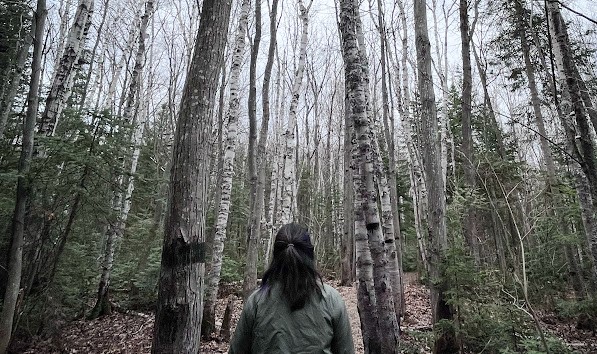
Covering around 75 per cent of the province, Nova Scotia’s forests both define its landscape and support a key industry – an industry that is looking to the future with the help of Dal researchers. A Dal-led research team was recently awarded $1.6 million to explore the future of forestry in Nova Scotia. The studyContinue reading “Nova Scotia is moving to a new forestry model — Dal researchers explore the consequences”
Dalhousie forestry research team led by Westwood lab receives $1.57 million to study Nova Scotia forests
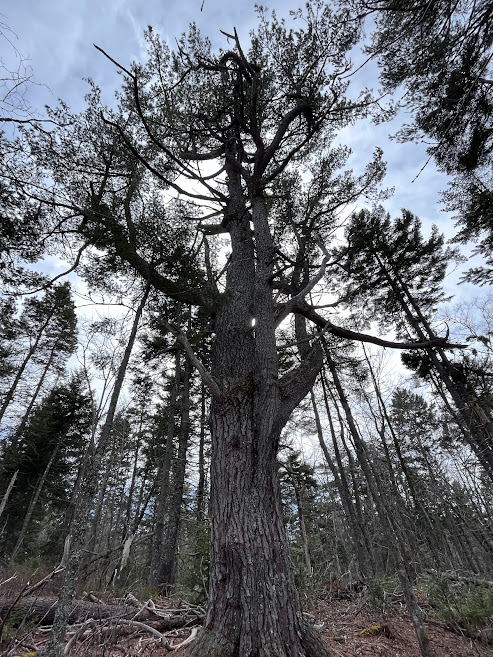
Read the full article from Research Nova Scotia. A team of forestry researchers led by Dalhousie University is receiving $1.57 million to undertake research on Nova Scotia’s forests and the industries and communities who depend upon them. The new project forms the cornerstone of Research Nova Scotia’s (RNS) forestry research program, which seeks to identifyContinue reading “Dalhousie forestry research team led by Westwood lab receives $1.57 million to study Nova Scotia forests”
Knowledge exchange in forestry: What is it and what’s effective?
Managing forests is not as simple as growing or cutting down trees. Global forest management is the complex interplay of government policies and directives, cultural and spiritual values, stakeholder perspectives, and efforts from both industry and conservationists to maintain ecological functions of forests. No one management style perfectly combines science, policy, stakeholder needs and culturalContinue reading “Knowledge exchange in forestry: What is it and what’s effective?”
 Westwood Lab