Summary
When it comes to ensuring that the best-available scientific knowledge is reflected in policy and practice, knowledge exchange must occur between knowledge producers and knowledge users. But what does knowledge exchange mean in forestry and forest sciences, and how does this work in practice? Our multi-pronged project examines KE between forest scientists, forestry practitioners, and decision-makers. The project does this by researching government forestry specialists, professional forestry practitioners, uptake of scientific articles focuses on forest science into public discourse and policy, and more.
The project teams tackling these questions are led by three different academic labs with collaborators in government. The project began with all members working together to conduct a systematic literature review which asked: What kinds of words are used by researchers and practitioners in this space to describe their activities? Are there particular knowledge exchange approaches that tend to be used more often than others? Is there any evidence that certain approaches are more effective than others? As published in our paper, we found a lack of a common definition and terminology for knowledge exchange that makes effectiveness difficult to study, and we propose a new typology for characterizing knowledge exchange.
The Social Ecology and Conservation Collaborative led interviews of Canadian federal government employees who were specialized in knowledge exchange between forest practitioners and external stakeholders. We unpacked their role as knowledge brokers, including the techniques they applied, how they evaluate successful knowledge exchange, and the factors influencing their perceptions of successful knowledge exchange.
The Quantitative Science Studies Lab measured engagement of different areas of published Canadian forestry research through Tweets, citations, policy mentions, and news reports. The project provides key insights into the concentration of engagement of each subdiscipline and research area, as well as individual publications and journals.
The Westwood Lab is investigating how knowledge exchange operates between forest sciences and those who primarily maintain and manage working forests in Canada: Registered Professional Foresters (RPFs) and Forest Technicians/Technologists (FTs). To understand the preferences of RPFs and FTs for engaging in knowledge exchange, a mixed-methods study involving a survey and semi-structured interviews is underway. The results will provide knowledge producers, such as researchers and scientists in forestry, with tangible practices and strategies for effective knowledge exchange when engaging and working with working RPFs and FTs.
Products
Infographics

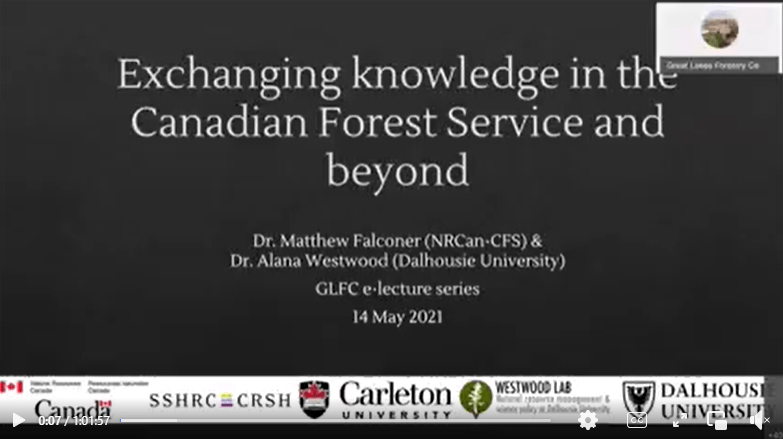
Webinars
Journal Articles
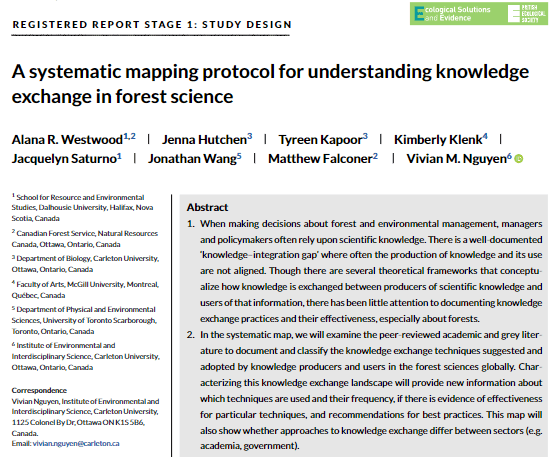
Westwood et al., 2021

Westwood et al., 2023
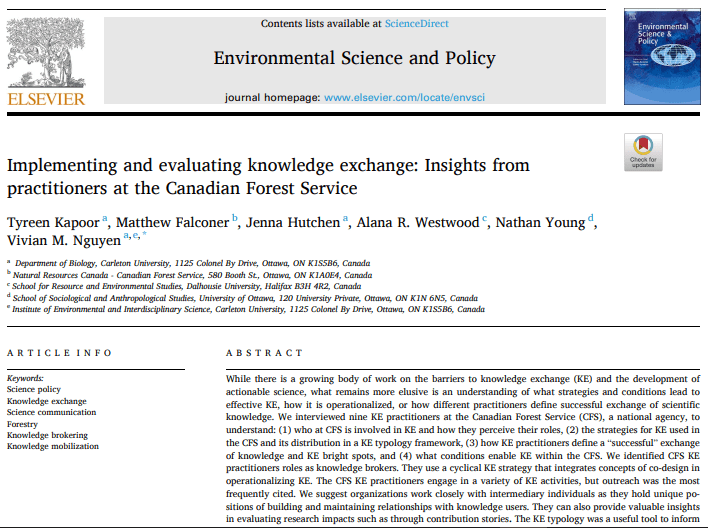
Kapoor et al., 2023
Thesis
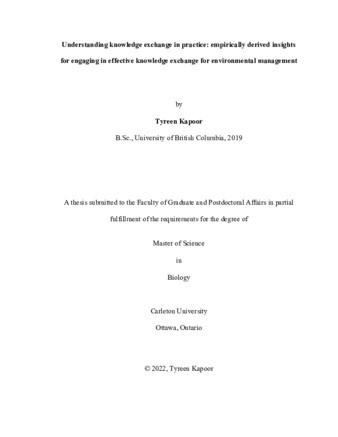
Kapoor, 2022
Media Coverage

The Science of Sharing our Science
by Klenk et al., 2021
University of Carleton, 2021
People
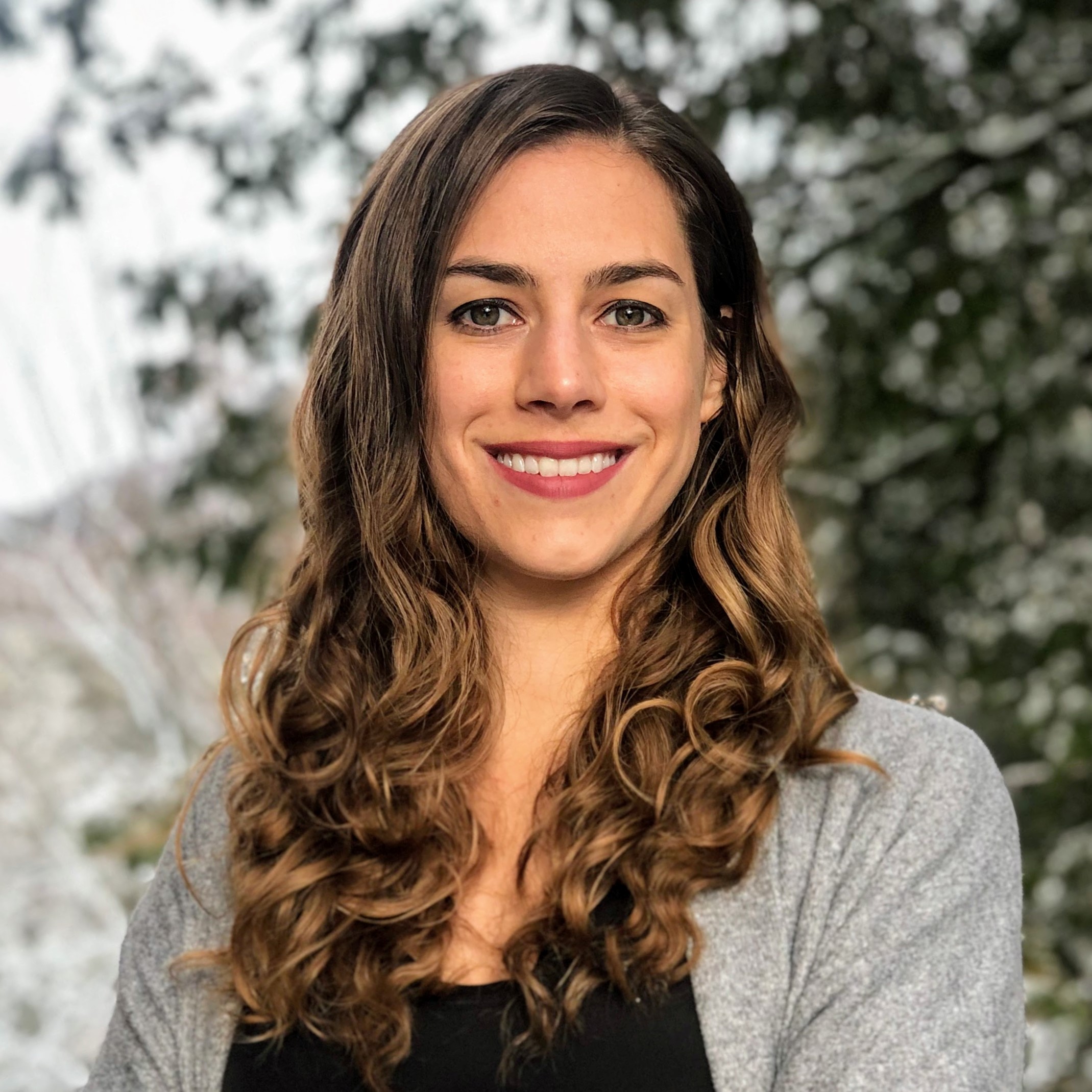
Dr. Alana Westwood
PI / Supervisor,
SRES at Dalhousie University

Dr. Vivian Nguyen
Supervisor / PI,
Carleton University

Dr. Matthew Falconer
Partner,
Natural Resources Canada
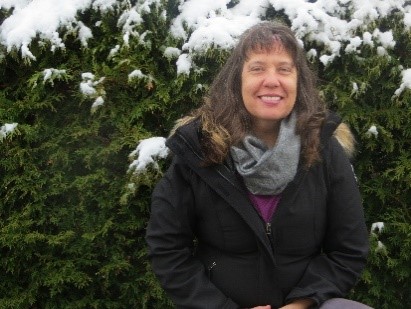
Dr. Heather MacDonald
Partner,
Natural Resources Canada

Dr. Philippe Mongeon
Co-Investigator,
Dalhousie University

Dr. Nathan Young
Co-Investigator,
Carleton University

Kimberly Klenk
Research Assistant,
Dalhousie University

Samantha Chu
Master’s Student,
Dalhousie University

Tyreen Kapoor
Master’s Student,
Dalhousie University

Jenna Hutchen
Ph.D. Candidate, Carleton University
Funding and Contribution


 Westwood Lab